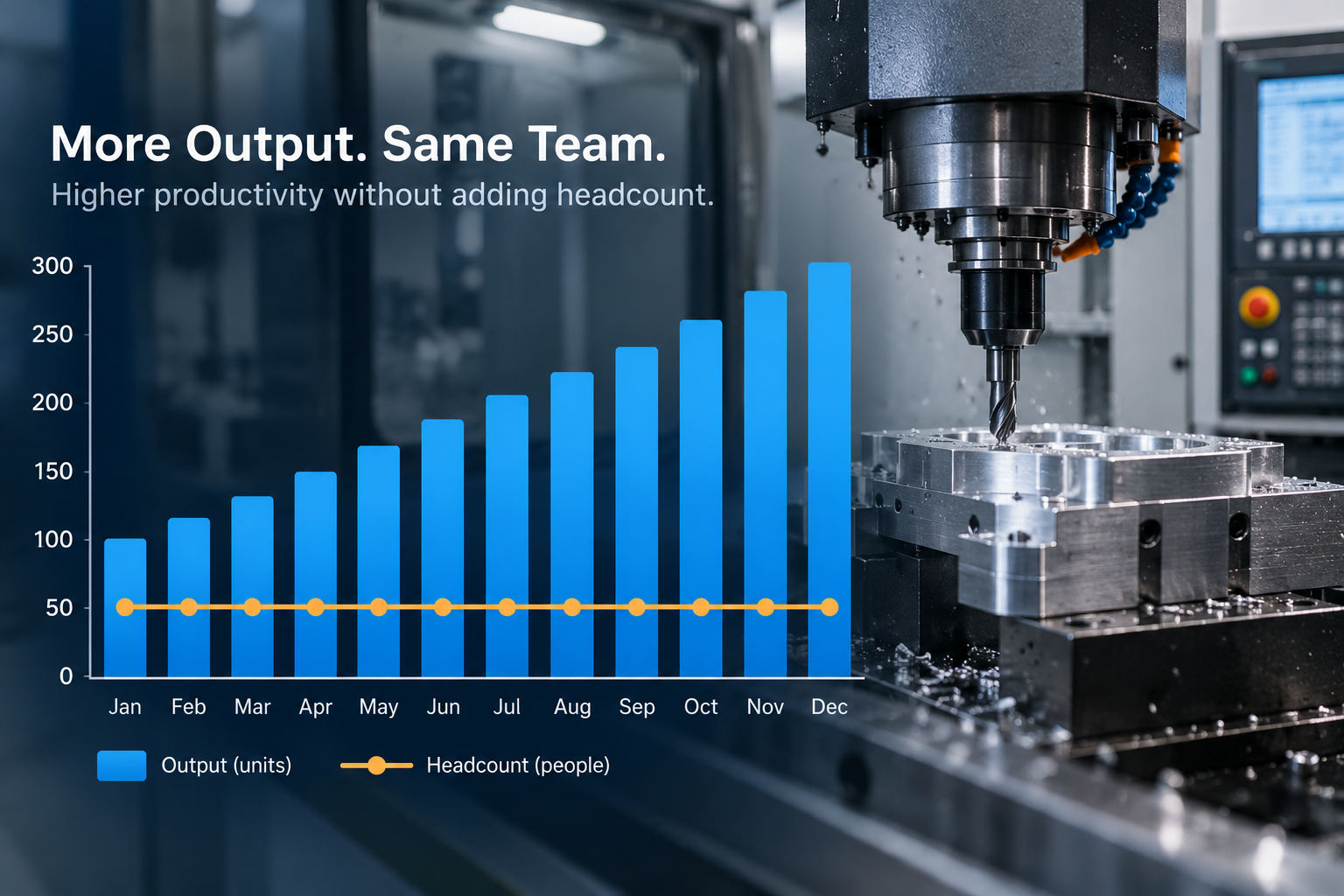
The numbers coming into IMTS 2026 told a clear story. U.S. manufacturing technology orders were up 28.9% through April compared with the year before. The ISM Manufacturing PMI reached 53.3% in June, firmly in expansion. And in the first quarter, manufacturing productivity rose 3.2% while output grew 3.3% without additional labor.
Put simply: shops are making more parts, and they are doing it with machines and software rather than people.
Why shops are buying instead of hiring
They don’t have much of a choice. Industry outlooks put the number of unfilled manufacturing jobs at roughly 425,000, and the skilled labor cliff we wrote about in August is only getting steeper as experienced machinists retire.
When you can’t hire the next operator, the next machine, cell or software upgrade becomes the way to grow. That is why automation and AI dominated both IMTS and AMB this year.
The hidden cost: the gap between delivery and productivity
A new five-axis machine or automated cell is a big investment. But the payback doesn’t start when it is delivered. It starts when it produces good parts at the target rate. Between those two dates there is often a long and expensive ramp-up:
- Building and checking tool assemblies for every new job.
- Recreating tools in CAM that already exist on the shelf.
- Hand-entering offsets, lengths and tool life limits.
- Proving out programs with trial cuts because the digital tools don’t quite match the real ones.
Every week of ramp-up is a week of depreciation without output. And it pulls your most experienced people, the ones you can least spare, away from production.
Tooling: 3–4% of the cost, most of the impact
As we explained in The Real Math on Cutting Tool Costs, cutting tools make up only about 3–4% of machining costs, yet they influence nearly everything else: cycle time, machine utilization, scrap and labor. The same applies to a new machine’s ramp-up. Getting the tooling and tool data right is the fastest way to turn capital spending into output.
Four ways to shorten the ramp
- Prepare the tool library before the machine arrives. Build and approve assemblies for the first jobs while the machine is still being installed.
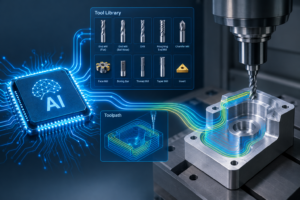
- Use manufacturer data, not retyped data. Verified geometry and 3D models remove the trial and error from simulation and prove-out.
- Connect CAM, presetting and the control. One definition, entered once, sent everywhere.
- Standardize across machines. A common tool set makes it easier to move jobs to wherever there is spare capacity.
The bottom line
The 2026 equipment boom is a bet that technology can close the labor gap. It can, but only if each new machine becomes productive quickly. Shops that treat tool data as part of the investment, not an afterthought, will see the return first.
MachiningCloud helps you get there faster. Manufacturer-verified tooling and workholding data, complete assemblies built in minutes, and direct export to your CAM and tool management systems.